
AI
Insights
Understanding App Development Software: Key Features and Evolution

Overview
The article centers on the essential features and evolution of app development software, underscoring its pivotal role in contemporary application creation and business strategies. It elaborates on advancements, such as low-code/no-code platforms and integrated development environments, which significantly enhance efficiency and user engagement. Furthermore, the article projects considerable market growth, propelled by the rising demand for user-friendly solutions. This evolution in app development is not merely a trend; it represents a fundamental shift in how businesses approach technology and innovation.
Introduction
The rapid evolution of technology has fundamentally transformed application development, positioning app development software as an indispensable asset for businesses striving to excel in a competitive landscape. This article explores the multifaceted world of app development software, emphasizing its key features and the substantial impact it has on operational efficiency and innovation. Furthermore, as the market increasingly shifts towards low-code and no-code solutions, organizations must consider how to effectively leverage these tools to address their unique needs and adapt to the evolving demands of consumers.
Define App Development Software
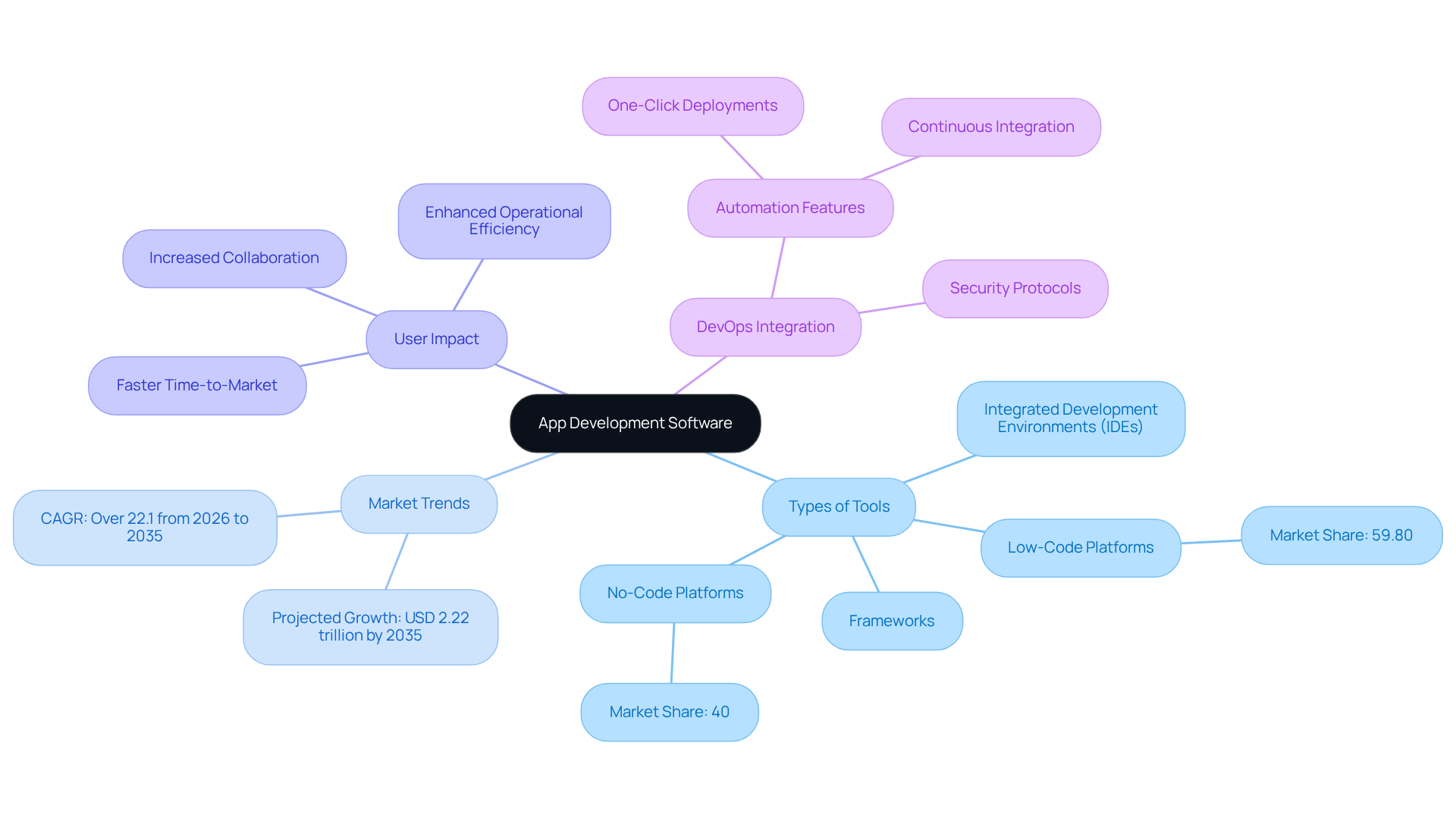
App development software includes a diverse array of tools and platforms designed to simplify the design, testing, and deployment of applications across various devices, including mobile phones, tablets, and desktops. These tools range from integrated coding environments (IDEs) that offer robust programming features to frameworks that facilitate the creation process. By empowering developers to build software tailored to specific user needs and business objectives, these solutions integrate essential components such as user interfaces, databases, and APIs.
Industry leaders underscore the vital role of app development software in fostering innovation and efficiency. Donald Knuth, a distinguished computer scientist, articulates that programming is an art that merges accumulated knowledge with skill and creativity, highlighting the necessity of effective tools in this artistic endeavor. Moreover, the market for app development software is projected to experience substantial growth, with estimates suggesting it will surpass USD 2.22 trillion by 2035, reflecting a compound annual growth rate (CAGR) exceeding 22.1% from 2026 to 2035.
By 2025, the market share of app creation software tools is expected to be dominated by low-code and no-code platforms, capturing approximately 59.80% and 40% of the market, respectively. This shift is driven by the increasing demand for user-friendly solutions that enable non-technical users to participate in app development. Successful implementations of app development software within organizations have illustrated its potential to enhance operational efficiency and expedite the time-to-market for new applications. Companies leveraging these tools have reported improved collaboration, accelerated production cycles, and the ability to swiftly adapt to evolving market demands.
Furthermore, the integration of DevOps automation within application creation software is pivotal in streamlining updates for digital products. Features like one-click deployments and rollbacks significantly reduce the time and effort required to manage software versions, allowing developers to focus on innovation rather than operational hurdles. Continuous integration processes further bolster this efficiency by facilitating regular code merges and automated testing, which are crucial for upholding high-quality standards in agile digital product development. Additionally, security protocols embedded within DevOps automation ensure that software remains secure throughout its lifecycle, protecting against potential vulnerabilities.
Overall, the evolution of app development software continues to shape the digital landscape by equipping developers with the essential tools to craft innovative applications that meet the ever-changing demands of users and businesses alike. The emphasis on real-time performance enhancement highlights the importance of balancing cost, speed, and resources, ensuring that systems not only function effectively but also deliver value in a competitive marketplace.
Contextualize the Role of App Development Software in Business
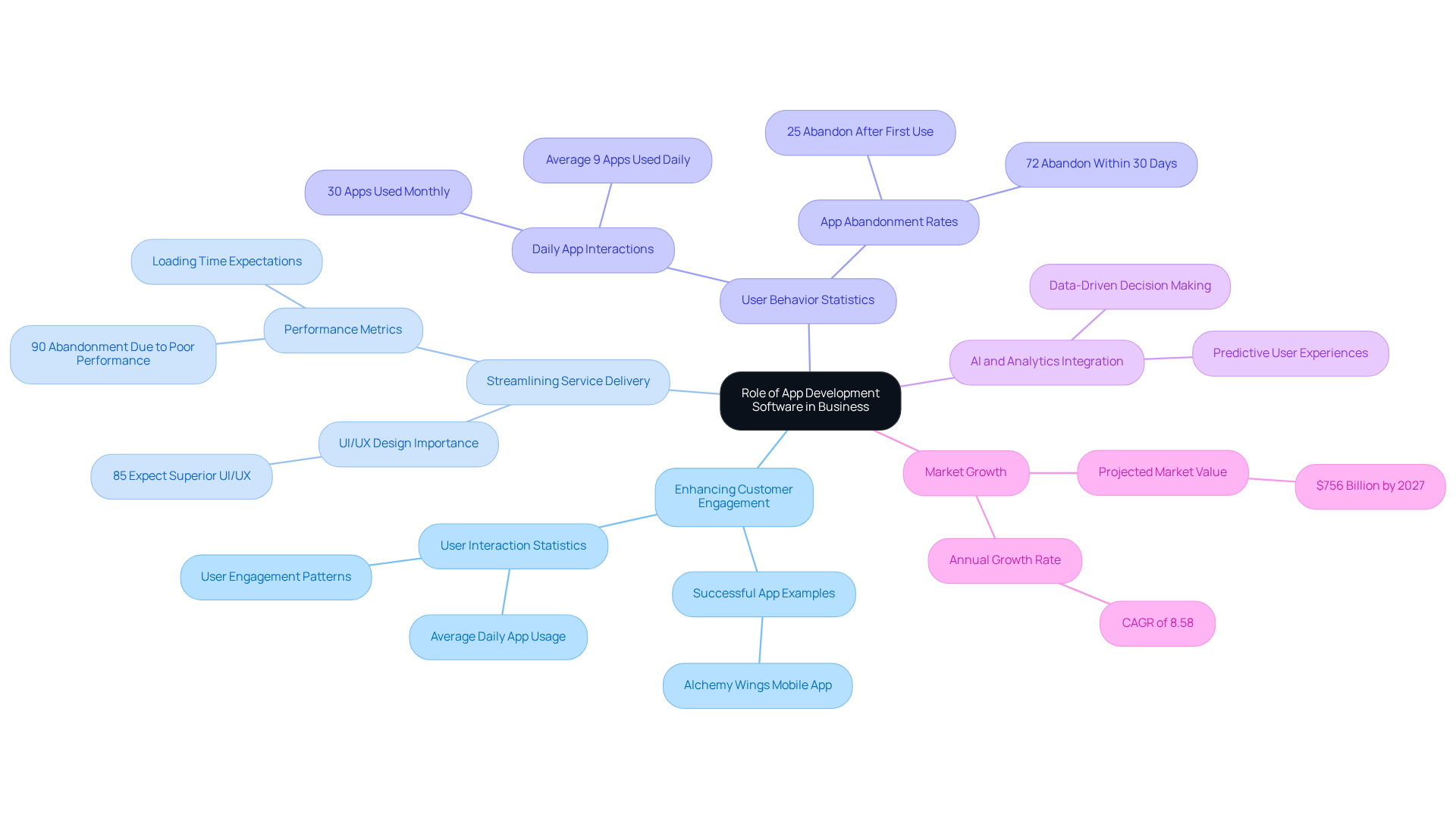
In the current digital landscape, app development software plays a pivotal role in shaping effective business strategies. These tools empower companies to develop solutions that significantly enhance customer engagement and streamline service delivery. For instance, Studio Graphene designed and developed a customer-facing mobile app and a mobile-responsive web presence for Alchemy Wings, featuring a simple and easy-to-navigate UI that simplifies the ordering process. This platform also provided access via an admin portal, offering detailed sales data, which is crucial for informed decision-making. Furthermore, the app included a vendor-friendly interface and a delivery verification system for individual delivery drivers, demonstrating how innovative mobile application creation can elevate dining experiences through seamless ordering and payment solutions.
Statistics reveal that 90% of individuals abandon applications due to subpar performance, underscoring the significance of dependable app creation in retaining users. Moreover, 67% of individuals will abandon an app if there are excessive steps to locate information, emphasizing the necessity for efficient app design to enhance user experience. App development software enables organizations to gather and analyze valuable user behavior data, which informs future product improvements and targeted marketing strategies. The integration of AI and analytics within these tools not only enhances operational efficiency but also fosters growth by allowing businesses to make informed, data-driven decisions.
As Niketan Sharma observes, the global mobile application market is expected to expand considerably, highlighting the essential role of app development software in addressing customer requirements and adapting to changing market demands. Companies utilizing advanced application creation tools can better meet customer needs and respond to evolving market dynamics.
Trace the Evolution of App Development Software
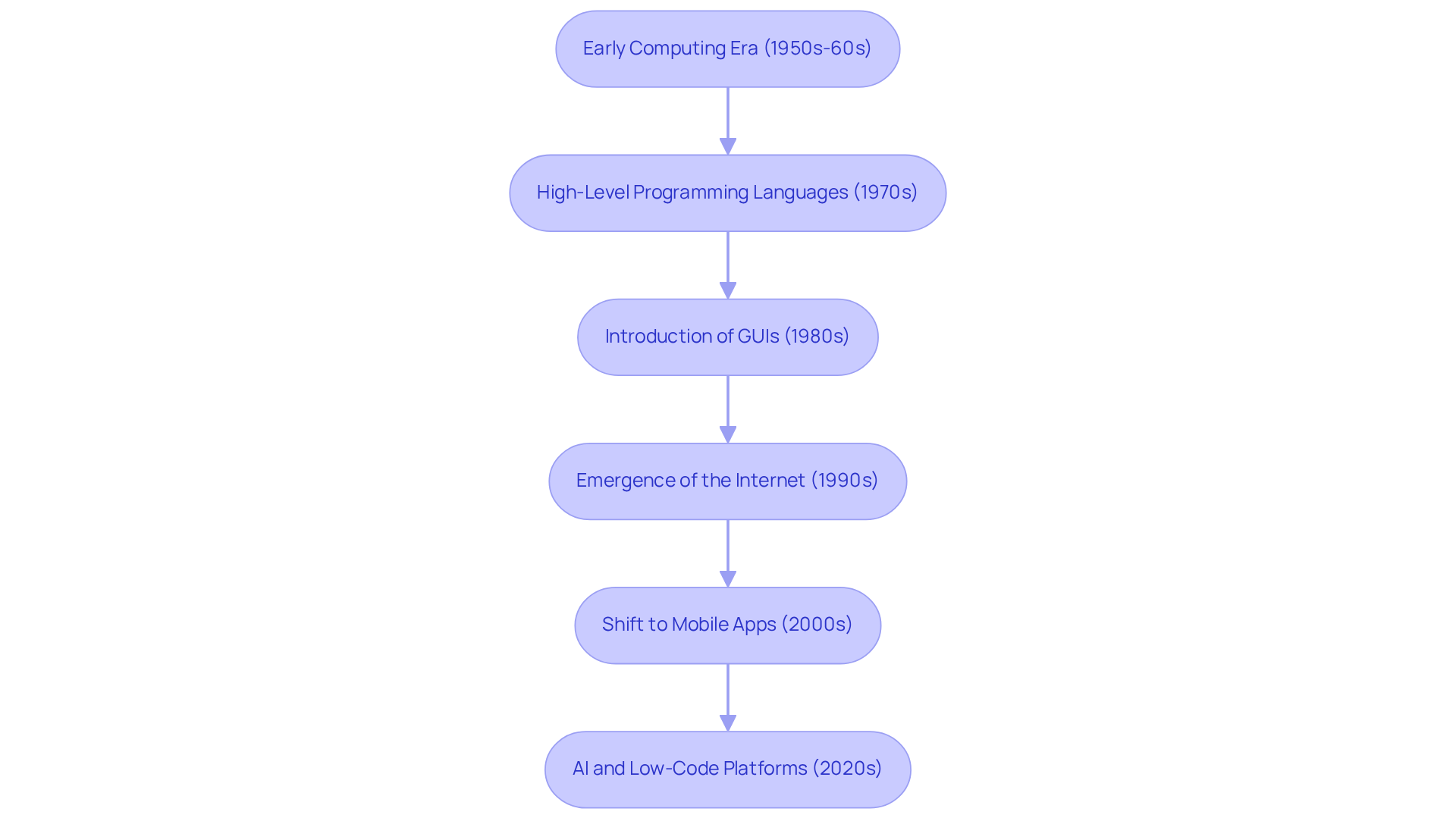
The evolution of app development software began in the early computing era, characterized by the use of punch cards and assembly language. As technology advanced, high-level programming languages emerged, streamlining the process of app development software for developers.
The introduction of graphical user interfaces (GUIs) in the 1980s represented a pivotal moment for app development software, enabling the design of more intuitive and user-friendly applications. Furthermore, the 1990s witnessed the emergence of the internet, which revolutionized app creation by facilitating the establishment of web-based programs.
The 2000s brought a significant shift with the advent of smartphones and app stores, prompting developers to prioritize the use of app development software for mobile applications. Today, the landscape continues to evolve, driven by the integration of artificial intelligence, machine learning, and low-code/no-code platforms, which enhance creation speed and efficiency.
This ongoing transformation reflects the industry's adaptability to evolving consumer needs and technological advancements.
Identify Key Features of App Development Software
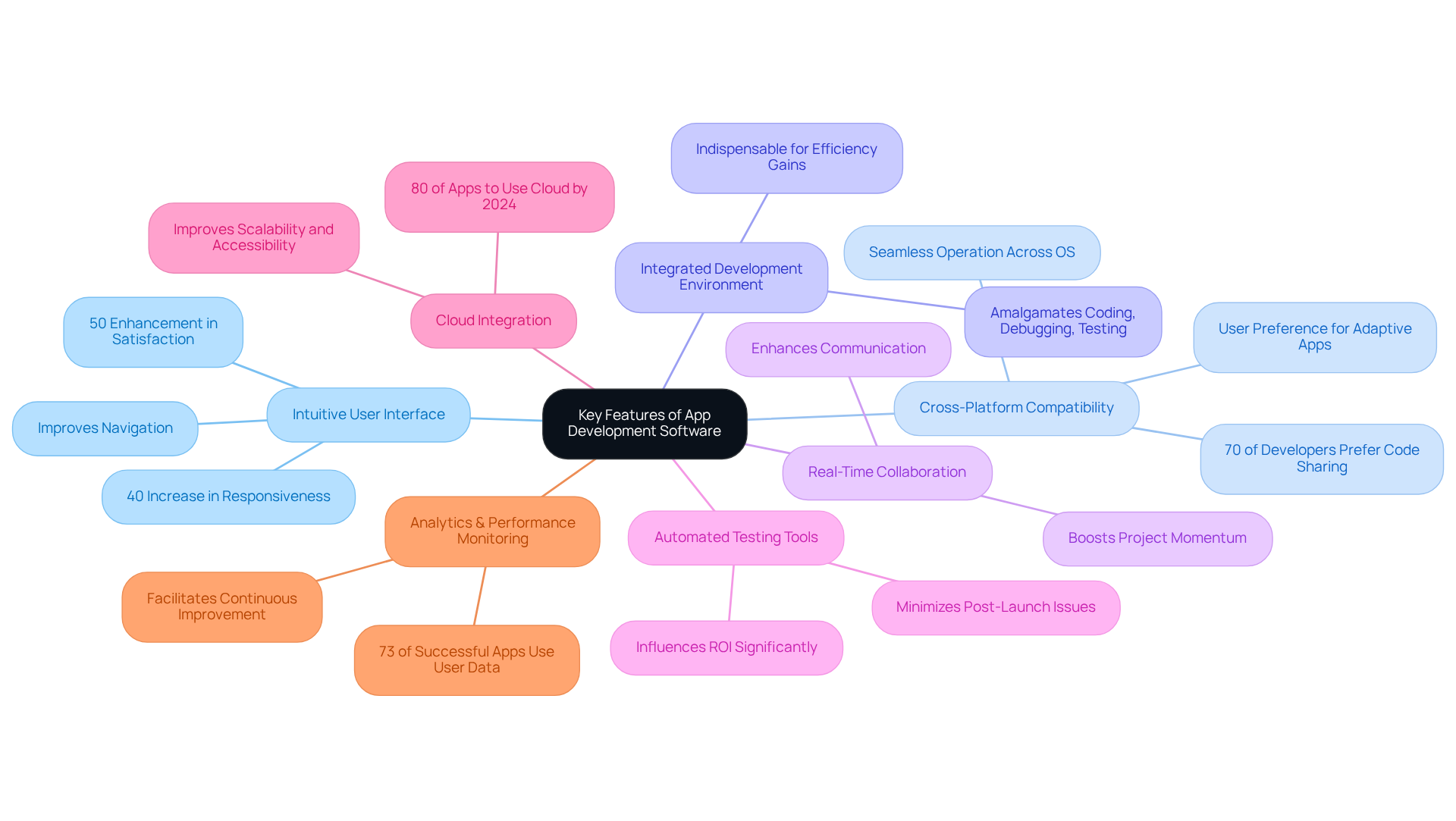
The essential aspects of app development software are crucial for creating efficient programs that meet individual requirements and align with business objectives. Among these, an Intuitive User Interface (UI) is paramount. A user-friendly interface streamlines navigation, significantly improving the development experience. Developers have noted that programs utilizing optimized libraries can experience up to a 40% increase in responsiveness, which directly correlates with client satisfaction and retention rates. Studies reveal that systems maintaining responsiveness can achieve enhancements in satisfaction levels of up to 50%, further underscoring the importance of intuitive design.
Cross-Platform Compatibility represents another critical feature, enabling developers to create applications that operate seamlessly across various operating systems, such as iOS and Android, with minimal modifications. Approximately 70% of developers prefer a code-sharing model for simultaneous deployment, reflecting the growing trend toward cross-platform solutions. This strategy not only conserves time but also reduces costs, making it an appealing choice for businesses seeking to reach broader audiences swiftly. Additionally, research indicates that 70% of users favor applications that adapt based on their recommendations, emphasizing the value of user input in the development process.
An Integrated Development Environment (IDE) is equally vital, offering a comprehensive platform that amalgamates coding, debugging, and testing tools. This integration simplifies the creation process, allowing teams to operate more efficiently. Statistics suggest that leveraging app development software can yield significant efficiency gains, establishing it as indispensable in modern application development.
Real-Time Collaboration features empower simultaneous contributions from multiple developers, enhancing communication and project momentum. This collaborative approach is increasingly essential in today’s fast-paced development landscape.
Automated Testing Tools are crucial for verifying that systems function correctly before deployment, thereby minimizing the likelihood of post-launch issues. With the average cost of developing a mobile app ranging from $40,000 to $270,000, effective testing using app development software can profoundly influence the overall return on investment. Implementing robust testing strategies can lead to a decrease in post-launch complications, ultimately enhancing the app's financial viability.
Cloud Integration capabilities enable applications to connect with cloud services for data storage and processing, improving scalability and accessibility. This is particularly relevant as over 80% of apps are anticipated to utilize cloud services by 2024, making cloud integration a vital component in app development software.
Ultimately, Analytics and Performance Monitoring tools provide insights into app performance and user engagement, facilitating continuous improvement. As 73% of successful applications utilize user data to refine user experiences, these analytics are invaluable for developers striving to enhance their products.
Conclusion
The significance of app development software is paramount, serving as the backbone for creating innovative applications that address the diverse needs of users and businesses. These tools have evolved from basic programming environments into sophisticated platforms that empower developers to streamline design, testing, and deployment processes. As the demand for user-friendly solutions escalates, the role of low-code and no-code platforms becomes increasingly central in this landscape.
Key insights regarding the evolution, features, and impact of app development software have emerged throughout this article. The transition from early computing methods to modern, integrated environments underscores the industry's adaptability to technological advancements and consumer demands. Essential features such as:
are critical for enhancing development efficiency and user engagement. Furthermore, the integration of analytics and performance monitoring tools facilitates continuous improvement, ensuring that applications not only function effectively but also resonate with users.
In light of these developments, it is evident that businesses must embrace app development software as a strategic asset to thrive in a competitive marketplace. By leveraging these tools, organizations can enhance operational efficiency, foster innovation, and respond swiftly to changing market dynamics. The future of app development lies in harnessing these capabilities to craft solutions that not only meet current demands but also anticipate future needs, ultimately driving growth and success in the digital age.
{"@context": "https://schema.org", "@type": "FAQPage", "mainEntity": [{"@type": "Question", "name": "What is app development software?", "acceptedAnswer": {"@type": "Answer", "text": "App development software refers to a range of tools and platforms that simplify the design, testing, and deployment of applications across various devices, including mobile phones, tablets, and desktops. These tools include integrated coding environments (IDEs) and frameworks that help developers create software tailored to user needs and business objectives."}}, {"@type": "Question", "name": "Why is app development software important?", "acceptedAnswer": {"@type": "Answer", "text": "App development software plays a vital role in fostering innovation and efficiency in the software development process. It enables developers to merge their knowledge, skill, and creativity to build applications effectively, enhancing operational efficiency and reducing time-to-market for new applications."}}, {"@type": "Question", "name": "What is the projected growth of the app development software market?", "acceptedAnswer": {"@type": "Answer", "text": "The app development software market is projected to surpass USD 2.22 trillion by 2035, with a compound annual growth rate (CAGR) exceeding 22.1% from 2026 to 2035."}}, {"@type": "Question", "name": "What types of platforms are expected to dominate the app creation software market by 2025?", "acceptedAnswer": {"@type": "Answer", "text": "By 2025, low-code and no-code platforms are expected to dominate the app creation software market, capturing approximately 59.80% and 40% of the market, respectively. This trend is driven by the demand for user-friendly solutions that allow non-technical users to engage in app development."}}, {"@type": "Question", "name": "How does app development software enhance organizational efficiency?", "acceptedAnswer": {"@type": "Answer", "text": "Successful implementations of app development software have shown to improve collaboration, accelerate production cycles, and allow companies to quickly adapt to evolving market demands, thereby enhancing operational efficiency."}}, {"@type": "Question", "name": "What role does DevOps automation play in app development software?", "acceptedAnswer": {"@type": "Answer", "text": "DevOps automation within application creation software streamlines updates for digital products through features like one-click deployments and rollbacks, reducing the time and effort needed to manage software versions. It also supports continuous integration processes that facilitate regular code merges and automated testing, ensuring high-quality standards."}}, {"@type": "Question", "name": "How does security factor into app development software?", "acceptedAnswer": {"@type": "Answer", "text": "Security protocols embedded within DevOps automation ensure that software remains secure throughout its lifecycle, protecting against potential vulnerabilities during the development and deployment processes."}}, {"@type": "Question", "name": "What is the significance of balancing cost, speed, and resources in app development?", "acceptedAnswer": {"@type": "Answer", "text": "Balancing cost, speed, and resources is crucial for ensuring that systems not only function effectively but also deliver value in a competitive marketplace, emphasizing the importance of real-time performance enhancement in app development."}}]}{"@context": "https://schema.org", "@type": "BlogPosting", "headline": "Understanding App Development Software: Key Features and Evolution", "description": "Explore key features and evolution of app development software shaping today's digital landscape.", "datePublished": "2025-09-07T00:00:27.145000", "image": ["https://cdn.prod.website-files.com/5fc90bae06ffc6ed06fd0e3c/68bcd9793ed115bb2efce2fe_snbrkjur-9-e-1-bd-7-d-1-2917-4-ba-9-93-bb-f-8529333-bc-9-d.webp", "https://cdn.prod.website-files.com/5fc90bae06ffc6ed06fd0e3c/68bcd9793ed115bb2efce301_xegajili-the-central-node-represents-the-overall-importance-of-app-development-software-while-the-branches-illustrate-various-aspects-benefits-and-statistics-that-highlight-its-impact-in-the-business-landscape.webp", "https://cdn.prod.website-files.com/5fc90bae06ffc6ed06fd0e3c/68bcd9793ed115bb2efce304_jdoavikc-e-7-bccfb-6-6-aaf-488-a-bad-4-3-a-4-a-764510-f-5.webp", "https://cdn.prod.website-files.com/5fc90bae06ffc6ed06fd0e3c/68bcd9793ed115bb2efce2fb_fsqwwqib-the-central-node-represents-the-overall-topic-and-each-branch-represents-a-key-feature-sub-branches-provide-additional-details-or-statistics-about-the-feature-helping-you-understand-why-each-aspect-is-important-in-app-development.webp"], "articleBody": "## Overview\nThe article centers on the essential features and evolution of app development software, underscoring its pivotal role in contemporary application creation and business strategies. It elaborates on advancements, such as low-code/no-code platforms and integrated development environments, which significantly enhance efficiency and user engagement. Furthermore, the article projects considerable market growth, propelled by the rising demand for user-friendly solutions. This evolution in app development is not merely a trend; it represents a fundamental shift in how businesses approach technology and innovation.\n\n## Introduction\nThe rapid evolution of technology has fundamentally transformed application development, positioning app development software as an indispensable asset for businesses striving to excel in a competitive landscape. This article explores the multifaceted world of app development software, emphasizing its key features and the substantial impact it has on operational efficiency and innovation. Furthermore, as the market increasingly shifts towards low-code and no-code solutions, organizations must consider how to effectively leverage these tools to address their unique needs and adapt to the evolving demands of consumers.\n\n## Define App Development Software\nApp development software includes a diverse array of tools and platforms designed to simplify the design, testing, and deployment of applications across various devices, including mobile phones, tablets, and desktops. These tools range from integrated coding environments (IDEs) that offer robust programming features to frameworks that facilitate the creation process. By empowering developers to build software tailored to specific user needs and business objectives, these solutions integrate essential components such as user interfaces, databases, and APIs. \n\nIndustry leaders underscore the vital role of app development software in fostering innovation and efficiency. Donald Knuth, a distinguished computer scientist, articulates that programming is an art that merges accumulated knowledge with skill and creativity, highlighting the necessity of effective tools in this artistic endeavor. Moreover, the market for app development software is projected to experience substantial growth, with estimates suggesting it will surpass USD 2.22 trillion by 2035, reflecting a compound annual growth rate (CAGR) exceeding 22.1% from 2026 to 2035. \n\nBy 2025, the market share of app creation software tools is expected to be dominated by low-code and no-code platforms, capturing approximately 59.80% and 40% of the market, respectively. This shift is driven by the increasing demand for user-friendly solutions that enable non-technical users to participate in app development. Successful implementations of app development software within organizations have illustrated its potential to enhance operational efficiency and expedite the time-to-market for new applications. Companies leveraging these tools have reported improved collaboration, accelerated production cycles, and the ability to swiftly adapt to evolving market demands. \n\nFurthermore, the integration of DevOps automation within application creation software is pivotal in streamlining updates for digital products. Features like one-click deployments and rollbacks significantly reduce the time and effort required to manage software versions, allowing developers to focus on innovation rather than operational hurdles. Continuous integration processes further bolster this efficiency by facilitating regular code merges and automated testing, which are crucial for upholding high-quality standards in agile digital product development. Additionally, security protocols embedded within DevOps automation ensure that software remains secure throughout its lifecycle, protecting against potential vulnerabilities. \n\nOverall, the evolution of app development software continues to shape the digital landscape by equipping developers with the essential tools to craft innovative applications that meet the ever-changing demands of users and businesses alike. The emphasis on [real-time performance enhancement](https://thebusinessresearchcompany.com/report/application-development-software-global-market-report) highlights the importance of balancing cost, speed, and resources, ensuring that systems not only function effectively but also deliver value in a competitive marketplace.\n\n\n## Contextualize the Role of App Development Software in Business\nIn the current digital landscape, app development software plays a pivotal role in shaping effective business strategies. These tools empower companies to develop solutions that significantly enhance customer engagement and streamline service delivery. For instance, Studio Graphene designed and developed a customer-facing mobile app and a mobile-responsive web presence for Alchemy Wings, featuring a simple and easy-to-navigate UI that simplifies the ordering process. This platform also provided access via an admin portal, offering [detailed sales data](https://studiographene.com/case-studies/alchemy-wings), which is crucial for informed decision-making. Furthermore, the app included a vendor-friendly interface and a delivery verification system for individual delivery drivers, demonstrating how innovative mobile application creation can elevate dining experiences through seamless ordering and payment solutions. \n\nStatistics reveal that 90% of individuals abandon applications due to subpar performance, underscoring the significance of dependable app creation in retaining users. Moreover, 67% of individuals will abandon an app if there are excessive steps to locate information, emphasizing the necessity for efficient app design to enhance user experience. App development software enables organizations to gather and analyze valuable user behavior data, which informs future product improvements and targeted marketing strategies. The integration of AI and analytics within these tools not only enhances operational efficiency but also fosters growth by allowing businesses to make informed, data-driven decisions. \n\nAs Niketan Sharma observes, the global mobile application market is expected to expand considerably, highlighting the essential role of app development software in addressing customer requirements and adapting to changing market demands. Companies utilizing advanced application creation tools can better meet customer needs and respond to evolving market dynamics.\n\n\n## Trace the Evolution of App Development Software\nThe evolution of app development software began in the early computing era, characterized by the use of punch cards and assembly language. As technology advanced, high-level programming languages emerged, streamlining the process of app development software for developers. \n\nThe introduction of graphical user interfaces (GUIs) in the 1980s represented a pivotal moment for app development software, enabling the design of more intuitive and user-friendly applications. Furthermore, the 1990s witnessed the emergence of the internet, which revolutionized app creation by facilitating the establishment of web-based programs. \n\nThe 2000s brought a significant shift with the advent of smartphones and app stores, prompting developers to prioritize the use of app development software for mobile applications. Today, the landscape continues to evolve, driven by the integration of [artificial intelligence](https://weblineindia.com/blog/software-development-statistics-trends), machine learning, and low-code/no-code platforms, which enhance creation speed and efficiency. \n\nThis ongoing transformation reflects the industry's adaptability to evolving consumer needs and technological advancements.\n\n\n## Identify Key Features of App Development Software\nThe essential aspects of app development software are crucial for creating efficient programs that meet individual requirements and align with business objectives. Among these, an **Intuitive User Interface (UI)** is paramount. A user-friendly interface streamlines navigation, significantly improving the development experience. Developers have noted that programs utilizing optimized libraries can experience up to a 40% increase in responsiveness, which directly correlates with client satisfaction and retention rates. Studies reveal that systems maintaining responsiveness can achieve enhancements in satisfaction levels of up to 50%, further underscoring the importance of intuitive design.\n\n**Cross-Platform Compatibility** represents another critical feature, enabling developers to create applications that operate seamlessly across various operating systems, such as iOS and Android, with minimal modifications. Approximately 70% of developers prefer a code-sharing model for simultaneous deployment, reflecting the growing trend toward cross-platform solutions. This strategy not only conserves time but also reduces costs, making it an appealing choice for businesses seeking to reach broader audiences swiftly. Additionally, research indicates that 70% of users favor applications that adapt based on their recommendations, emphasizing the value of user input in the development process.\n\nAn **Integrated Development Environment (IDE)** is equally vital, offering a comprehensive platform that amalgamates coding, debugging, and testing tools. This integration simplifies the creation process, allowing teams to operate more efficiently. Statistics suggest that leveraging app development software can yield significant efficiency gains, establishing it as indispensable in modern application development.\n\n**Real-Time Collaboration** features empower simultaneous contributions from multiple developers, enhancing communication and project momentum. This collaborative approach is increasingly essential in today\u2019s fast-paced development landscape.\n\nAutomated Testing Tools are crucial for verifying that systems function correctly before deployment, thereby minimizing the likelihood of post-launch issues. With the average cost of developing a mobile app ranging from $40,000 to $270,000, effective testing using app development software can profoundly influence the overall return on investment. Implementing robust testing strategies can lead to a decrease in post-launch complications, ultimately enhancing the app's financial viability.\n\n**Cloud Integration** capabilities enable applications to connect with cloud services for data storage and processing, improving scalability and accessibility. This is particularly relevant as over 80% of apps are anticipated to utilize cloud services by 2024, making cloud integration a vital component in app development software.\n\nUltimately, [Analytics and Performance Monitoring tools](https://xhumanlabs.com/2025/02/17/top-mobile-app-development-stats-2023) provide insights into app performance and user engagement, facilitating continuous improvement. As 73% of successful applications utilize user data to refine user experiences, these analytics are invaluable for developers striving to enhance their products.\n\n\n\n## Conclusion\nThe significance of app development software is paramount, serving as the backbone for creating innovative applications that address the diverse needs of users and businesses. These tools have evolved from basic programming environments into sophisticated platforms that empower developers to streamline design, testing, and deployment processes. As the demand for user-friendly solutions escalates, the role of low-code and no-code platforms becomes increasingly central in this landscape.\n\nKey insights regarding the evolution, features, and impact of app development software have emerged throughout this article. The transition from early computing methods to modern, integrated environments underscores the industry's adaptability to technological advancements and consumer demands. Essential features such as:\n\n- Intuitive user interfaces\n- Cross-platform compatibility\n- Real-time collaboration\n\nare critical for enhancing development efficiency and user engagement. Furthermore, the integration of analytics and performance monitoring tools facilitates continuous improvement, ensuring that applications not only function effectively but also resonate with users.\n\nIn light of these developments, it is evident that businesses must embrace app development software as a strategic asset to thrive in a competitive marketplace. By leveraging these tools, organizations can enhance operational efficiency, foster innovation, and respond swiftly to changing market dynamics. The future of app development lies in harnessing these capabilities to craft solutions that not only meet current demands but also anticipate future needs, ultimately driving growth and success in the digital age.\n\n::iframe[https://iframe.tely.ai/cta/eyJhcnRpY2xlX2lkIjogIjY4YmNjYjFiODk3ZGE3Yzg5OGM1ODYyMCIsICJjb21wYW55X2lkIjogIjY3YzVkZmRhMjY3MzljNjRhMWVjYjdiYSIsICJpbmRleCI6IG51bGwsICJ0eXBlIjogImFydGljbGUifQ==]{width=\"100%\" height=\"300px\"}"}